
Why Healthy Gums Are Essential for Successful Dental Implants in Warrenton, VA
Most patients who come in asking about dental implants in Warrenton are focused on one thing: replacing a missing tooth and getting their smile back. That makes complete sense. What many patients do not realize, however, is that the condition of their gums plays a major role in whether implants succeed or fail.
Gum disease is one of the most common oral health conditions in the United States. According to the National Institute of Dental and Craniofacial Research, more than 42% of adults aged 30 and older in the United States have some form of periodontitis. In adults aged 65 and older, that figure rises to roughly 60%.
The good news is that gum disease does not automatically disqualify you. With the right preparation and periodontal treatment, many patients go on to have successful, long-lasting implants.
This article explains why healthy gums matter for implant success, what happens when gum disease is present, how peri-implantitis develops, and what you can do to protect your implants for the long term.
Why Gum Health Is the Foundation of Dental Implant Success
Dental Implants Depend on Healthy Supporting Tissue
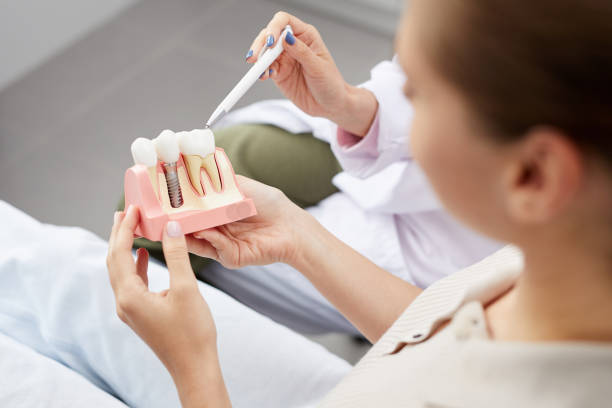
A dental implant is a titanium fixture placed directly into the jawbone. Once placed, the implant fuses with the surrounding bone through a process called osseointegration. That integration depends heavily on the health of the tissue surrounding the implant site.
Healthy gingival tissue, meaning the gums, creates a protective seal around the implant. That seal keeps bacteria away from the bone and the implant fixture itself. When the gums are inflamed, infected, or pulling away from the teeth, that protective barrier breaks down.
Patients asking about dental implants in Warrenton, VA often assume the procedure is purely about bone. In reality, soft tissue health is just as important. Gums that are stable and free of active infection give an implant the best possible environment to heal and integrate.
The Relationship Between Gums, Bone, and Dental Implants
Gums and jawbone work together as a support system. Healthy gum tissue holds connective tissue attachments that anchor to the alveolar bone, the part of the jaw that surrounds and supports teeth and implants.
When gum disease develops, the inflammatory response it triggers does not stop at the gum line. Oral bacteria release toxins that attack connective tissue and, over time, begin breaking down the alveolar bone underneath.
This matters for implants because bone density and volume are what hold the implant fixture in place. Compromised bone from untreated gum disease can reduce the amount of available bone for implant placement. It can also affect how well the implant integrates after surgery.
What Happens When Gum Disease Is Present Before Implant Treatment?
Gum Inflammation Can Compromise Implant Outcomes
Periodontal disease exists on a spectrum. Gingivitis is the earliest stage, characterized by swollen gums, bleeding gums, and mild inflammation. At this stage, the damage is largely reversible with professional cleaning and improved home care.
Periodontitis is the more advanced form. At this stage, the gums begin separating from the teeth, forming periodontal pockets where bacteria accumulate. The bone supporting the teeth starts to deteriorate.
Placing dental implants in the presence of active gum inflammation creates a direct risk. The same bacteria that cause periodontal disease can attack an implant site before it has a chance to heal properly. This raises the risk of implant failure at a stage when the implant is most vulnerable.
Active Infection Must Be Addressed First
An active gum infection is a contraindication for implant placement. Introducing a titanium implant into a mouth with untreated periodontal disease is like building on an unstable foundation. The infection does not resolve on its own, and it does not stop spreading because an implant is nearby.
Before any implant surgery, the mouth needs to reach a stable periodontal baseline. That means reducing inflammation, eliminating active infection, and bringing periodontal pockets to a manageable depth. Only then can the implant site be properly evaluated for surgery.
Gum disease treatment in Warrenton is not a separate process from implant planning. For many patients, it is an early and necessary part of it.
Bone Loss May Already Be Occurring
One of the most significant consequences of untreated gum disease is bone loss from gum disease. As periodontitis advances, the alveolar bone that supports the teeth begins to resorb, meaning the body gradually breaks it down.
This periodontal bone loss can happen slowly over months or years, often without obvious symptoms. Many patients are surprised to learn during an implant evaluation that bone loss is already present.
Bone loss affects implant candidacy in two important ways. First, it reduces the volume of bone available to support the implant fixture. Second, it changes the architecture of the jaw, which can affect how the implant is positioned and how the final restoration looks.
Jaw bone grafting in Warrenton, VA is one option when bone loss has reduced available volume below what is needed for implant placement. A bone graft before implant surgery adds material to the deficient area and allows the site to rebuild over several months before the implant is placed.
Can You Get Dental Implants If You Have Gum Disease?
Every Case Is Different
The short answer is: not until the gum disease is treated. The longer answer depends on the severity of the disease, the amount of bone remaining, your overall health, and how well you respond to periodontal therapy.
Patients with early gum disease, meaning gingivitis or mild periodontitis, often move through treatment relatively quickly and reach a stable baseline in a reasonable timeframe. Patients with chronic gum disease or advanced periodontitis may require a longer treatment and monitoring period before implant surgery is appropriate.
A thorough implant candidacy assessment includes a review of gum health, bone density through imaging, medical history, and an honest conversation about realistic outcomes. No two patients are in the same situation, and implant treatment planning reflects that.
Treating Gum Disease Before Implant Placement
For most patients, treating gum disease before implant placement involves non-surgical periodontal therapy. The most common approach is scaling and root planing, sometimes called a deep cleaning.
Scaling removes plaque buildup and tartar accumulation from above and below the gum line. Root planing smooths the root surfaces to make it harder for bacteria to reattach. This disrupts the bacterial environment that drives inflammation and allows the gums to begin healing.
After deep cleaning, patients typically return for a re-evaluation appointment. The dentist assesses periodontal pocket depths, tissue tone, and the overall response to treatment. If the gums have responded well and inflammation has resolved, implant planning can move forward.
When Bone Grafting May Be Necessary
If bone loss has already occurred, a dental bone graft may be needed before implant placement. The graft material, which can come from several sources including processed human or animal bone or synthetic materials, provides a scaffold for the body to grow new bone tissue.
Bone grafting is a routine part of implant planning after bone loss. It is not a sign that implants are out of reach. It does add time to the overall treatment timeline, but it improves implant bone support and increases the likelihood of long-term implant success.
At Yung & Jelinek Comprehensive Family Dentistry, implant planning is handled in-house. Patients do not need to visit multiple providers for evaluation, grafting, and restoration. The full process is managed within the same familiar practice.
Understanding Peri-Implantitis and Why Prevention Matters
What Is Peri-Implantitis?
Peri-implantitis is a condition that affects the tissue and bone surrounding a dental implant after it has been placed. It is a form of implant infection caused by the same oral bacteria responsible for periodontal disease.
In peri-implant disease, inflammation develops in the gum tissue around the implant. If left untreated, the inflammatory response begins destroying the bone that holds the implant in place. This can lead to implant bone loss and, in some cases, implant failure.
According to a systematic review published in the Journal of Periodontology, peri-implantitis affects approximately 21% of implant patients, with periodontitis identified as a significant risk indicator. Managing that risk begins before implant placement and continues throughout the life of the implant.
How It Differs From Gum Disease Around Natural Teeth
Gum disease around natural teeth and gum disease around implants share the same bacterial cause, but they behave differently. Natural teeth have a periodontal ligament, a layer of tissue that connects the tooth root to the bone and provides some degree of defense against bacterial invasion.
Dental implants do not have a periodontal ligament. The implant fixture connects directly to the bone through osseointegration. This means there is no buffer between the surface of the implant and the surrounding bone.
When bacteria breach the gum tissue around an implant, bone loss can progress more rapidly than it does around natural teeth. That makes early detection and consistent implant maintenance particularly important.
Signs Patients Should Never Ignore
Peri-implantitis does not always cause obvious pain in its early stages. That is part of what makes it difficult to catch without regular professional monitoring.
Signs that may indicate a problem include:
- Bleeding around implants when brushing or probing
- Swollen gums around the implant
- Redness or tenderness in the gum tissue near the implant
- A feeling that the implant is loose or shifting
- Visible gum recession around the implant
- Discharge or a bad taste near the implant site
None of these symptoms should be dismissed or assumed to resolve on their own. If you notice any of these changes, contact our Warrenton dental office as soon as possible for an evaluation.
How Healthy Gums Improve Long-Term Implant Success
Better Osseointegration
Osseointegration is the process by which a titanium implant fuses with the surrounding bone. It is the biological foundation of implant stability. When it happens successfully, the implant becomes a stable, load-bearing part of the jaw.
Healthy gums create the right environment for osseointegration to occur. When gum tissue is free of infection and inflammation, blood flow to the surgical site is better, healing is more predictable, and the risk of early implant failure is lower.
Patients with controlled gum health going into surgery consistently show better integration outcomes than those with active periodontal disease at the time of placement.
Improved Stability and Function
A well-integrated implant functions like a natural tooth root. It supports a crown, bridge, or full-arch prosthesis and transfers bite forces into the jawbone naturally.
Healthy gum tissue around the implant provides stability above the bone level. It supports the aesthetic appearance of the implant by maintaining the natural gum contour. It also reduces the risk of food and bacteria reaching the implant fixture below the gum line.
Patients with stable gum health long after implant placement report better comfort, improved chewing function, and greater confidence in their restoration over time.
Reduced Risk of Implant Failure
Implant failure has several causes, but periodontal bone loss and infection are among the most preventable. Patients who arrive at implant surgery with treated, stable gums reduce their risk profile significantly.
Factors affecting implant success include smoking, uncontrolled diabetes, bone density, bite forces, and oral hygiene. Gum health intersects with several of these. A patient whose gum disease is well-managed is also more likely to maintain the home care habits and keep the professional appointments that protect implants long term.
Better Cosmetic Outcomes
Implant aesthetics depend on more than the crown sitting on top of the implant. The appearance of the gum tissue around the implant matters just as much.
Healthy gums hold their shape and maintain a natural contour around the implant crown. When gum tissue has been damaged by periodontal disease or recession, the final appearance of the implant may be compromised. The crown may look longer than natural, or gum tissue may be uneven around the restoration.
Addressing gum recession and restoring healthy tissue before implant placement gives the restorative team a better canvas to work with and improves the long-term aesthetic result.
Why Gum Disease Treatment Is Often Part of Implant Planning
Deep Cleaning and Periodontal Therapy
For patients with active gum disease, non-surgical gum disease treatment is typically the first step in the implant process. Scaling and root planing cleans the root surfaces below the gum line, disrupts bacterial colonies living in periodontal pockets, and reduces the inflammation driving bone loss.
Periodontal therapy in Warrenton at our practice is performed with careful attention to patient comfort. Local anesthetic is used throughout the procedure. Most patients tolerate it well and return to normal activity quickly.
After treatment, the gums are monitored over several weeks. The response to therapy guides the next decision: whether to move forward with implant planning, continue periodontal maintenance, or consider additional treatment.
Monitoring Gum Health Before Surgery
A single deep cleaning appointment is rarely the end of the periodontal phase. Ongoing monitoring confirms that the gums have stabilized and that inflammation is not returning before surgery begins.
This monitoring period also gives the dental team time to assess how the patient manages home care. Consistent brushing, flossing, and attendance at follow-up appointments during this phase are a good indicator of the habits that will protect the implant after placement.
Creating an Ideal Implant Environment
The goal of pre-implant periodontal treatment is not just to eliminate infection. It is to create a stable, predictable environment in which the implant can be placed and heal without interference.
That means healthy gingival tissue with normal pocket depths, no active bleeding on probing, stable alveolar bone, and an oral environment where bacteria are being managed effectively. Reaching that baseline before surgery significantly improves implant outcomes.
Daily Habits That Help Keep Gums Healthy Before and After Dental Implants
Brushing and Flossing Techniques
Good home care is one of the most direct ways a patient can protect both gums and implants. Brushing twice daily with a soft-bristled toothbrush removes plaque buildup from tooth and implant surfaces. Angled brushing along the gum line reaches areas where bacteria tend to accumulate.
Flossing once daily, or using an interdental brush or water flosser, cleans between teeth and around implant abutments where a regular brush cannot reach. Tartar accumulation begins with plaque that is not removed. Disrupting that plaque daily is the single most effective thing a patient can do at home.
Professional Cleanings and Exams
Regular professional cleanings remove calculus that home care cannot reach. For patients with a history of periodontal disease, more frequent maintenance visits, typically every three to four months, may be recommended rather than the standard twice-yearly schedule.
These visits also allow the dental team to monitor gum tissue stability, check periodontal pocket depths around implants, and catch any early signs of peri-implant disease before they progress.
Avoiding Tobacco and Other Risk Factors
Tobacco use is one of the most significant risk factors for both gum disease and implant failure. Smoking reduces blood flow to gum tissue, impairs the immune response, and slows healing after surgery. Patients who smoke have measurably lower implant success rates than non-smokers.
Other risk factors that affect gum health and implant outcomes include:
- Uncontrolled diabetes, which impairs healing and increases infection risk
- Dry mouth, which reduces the protective effects of saliva
- Certain medications that affect bone density or gum tissue
- Teeth grinding, which places excessive force on implants
Managing Medical Conditions That Affect Gum Health
Some systemic conditions are directly linked to periodontal disease. Diabetes, cardiovascular disease, and immune system disorders can all influence how the gums respond to bacterial challenges.
Patients with these conditions are not automatically excluded from implant treatment, but their medical management needs to be stable and their periodontal health well-controlled before surgery proceeds. Coordinating with a physician when relevant is part of responsible implant treatment planning at our Warrenton practice.
Dental Implants and Gum Health for Single Tooth and Full Mouth Restorations
Single Tooth Dental Implants
A single tooth implant replaces one missing tooth with a titanium fixture, an abutment, and a crown. It is one of the most predictable restorations in modern dentistry when placed in a patient with healthy supporting tissue.
For single tooth cases, the gum tissue immediately surrounding the implant site receives the most attention. Healthy tissue at that specific location supports natural-looking gum contour around the crown and protects the implant fixture from bacterial exposure.
Patients with localized gum recession or bone loss at the implant site may need soft tissue or bone grafting before placement to ensure an adequate foundation.
Full Mouth Dental Implants
For patients missing most or all of their teeth, full mouth dental implants in Warrenton, VA offer a fixed, long-term solution. A full mouth restoration typically involves multiple implants placed throughout the upper or lower arch, or both, supporting a full set of replacement teeth.
In full mouth cases, the overall periodontal health of the entire mouth matters. Even if some areas appear unaffected by gum disease, active infection anywhere in the mouth increases systemic bacterial load and can compromise healing at the implant sites.
A thorough periodontal evaluation of the entire mouth is part of every full mouth implant consultation at Yung & Jelinek Comprehensive Family Dentistry.
All-on-4 and Full Arch Cases
All-on-4 dental implants in Warrenton, VA use four strategically placed implants to support a full arch of replacement teeth. All-on-X variations may use a different number of implants depending on bone availability and the specific treatment plan.
These full arch restorations are often appropriate for patients who have experienced significant tooth loss, including bone loss associated with long-term gum disease or tooth decay. Bone grafting and periodontal preparation are more commonly needed in these cases, and full mouth implant planning requires careful imaging and sequencing.
Implant-supported dentures offer a fixed alternative to traditional removable dentures. They rely on the same principle: healthy tissue, adequate bone, and a stable oral environment give the implants the best chance of lasting success.
FAQs About Gum Health and Dental Implants
Can I get dental implants if I have gum disease?
Not until the gum disease has been treated and the mouth reaches a stable baseline. Active periodontal disease creates an environment where implants are at high risk of failure. Once gum disease is controlled through periodontal therapy and the tissue has stabilized, most patients can move forward with implant planning. The timeline depends on the severity of the disease and how well the gums respond to treatment.
Do healthy gums improve implant success rates?
Yes. Healthy gums create the conditions needed for osseointegration to occur properly. They protect the bone surrounding the implant, support stable healing after surgery, and reduce the risk of peri-implantitis developing later. Patients who arrive at surgery with well-controlled gum health and maintain it afterward have significantly better long-term implant outcomes.
What is peri-implantitis?
Peri-implantitis is an infection of the gum tissue and bone surrounding a dental implant. It is caused by the same bacteria responsible for gum disease and can lead to progressive bone loss around the implant if not caught and treated early. Warning signs include bleeding around the implant, swollen or tender gum tissue, and in later stages, implant mobility. Regular monitoring after implant placement is the most effective way to detect it early.
Why might I need gum treatment before getting implants?
If gum disease is present at the time of your implant evaluation, it needs to be resolved before surgery. Active infection, inflamed tissue, and existing bone loss all increase the risk of implant failure. Periodontal treatment, most often scaling and root planing, brings the mouth to a stable condition and creates a healthier foundation for the implant. In some cases, bone grafting is also needed to restore adequate bone volume.
How do I keep my gums healthy after getting dental implants?
Consistent home care and regular professional maintenance are the two most important factors. Brush twice daily with a soft toothbrush, floss or use an interdental cleaner daily, and attend your scheduled hygiene and monitoring appointments. Patients with a history of gum disease typically benefit from more frequent professional visits. Avoiding tobacco, managing medical conditions that affect healing, and reporting any changes around your implants promptly all contribute to long-term implant health.
Build a Strong Foundation for Dental Implants in Warrenton, VA
Dental implants are one of the most reliable ways to replace missing teeth, but their success depends on what surrounds them. Healthy gums protect the bone, support healing, and give an implant the stable foundation it needs to last.
If you have been told you have gum disease, or if you have noticed bleeding gums, receding gums, or persistent gum tenderness, addressing those issues is the first step toward becoming a strong implant candidate. Periodontal treatment can improve your candidacy, protect your bone, and set the stage for a more predictable implant outcome.
At Yung & Jelinek Comprehensive Family Dentistry, restorative dental care in Warrenton includes both periodontal therapy and implant placement and restoration under one roof. You will not need to coordinate between multiple providers or repeat your history to a new team. From your first evaluation through the final restoration, your care is managed by a team that knows your history and your goals.
Whether you are considering a single tooth implant, exploring Warrenton dental implants for multiple missing teeth, or researching full-arch options, the right starting point is a thorough evaluation.
Schedule a dental implant consultation in Warrenton today. Call our office or request an appointment online to speak with our team about your gum health, your bone levels, and your options for restoring your smile on a foundation that is built to last.

Categories: Restorative Dentist | Published: June 24, 2026
